
Translator & Poet Talk: Maria do Sameiro Barroso on the International Day of the Portuguese Language
- May 7
- 4 min read
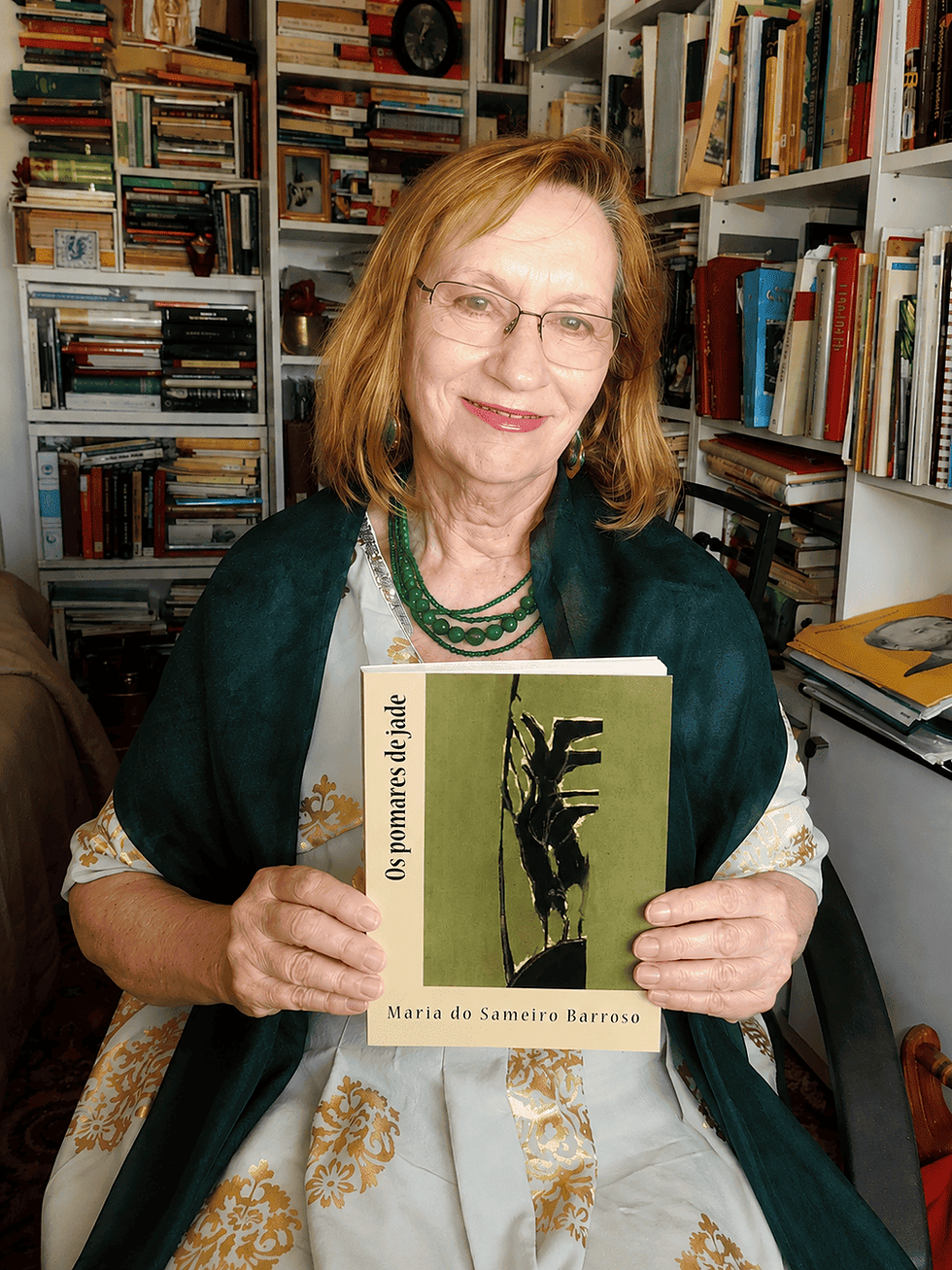
Your collection Os Pomares de Jade brings together myth, history, and spirituality. How does the Portuguese language shape the way you express this rich cultural and symbolic universe?
I am fascinated by the musicality of the words. The Portuguese language has a unique musical quality, especially when we consider its use by great poets like Camões. Our cultural history is long and rich, and I enjoy exploring it as a backdrop for my poetic expression. However, my interests extend beyond Portuguese history. I have a passion for history, music, and fine arts, as well as a scientific curiosity regarding the Natural Sciences and Medicine. All these elements blend in my poetry, reflecting the unity derived from my diverse interests.
The title itself evokes both nature and precious material—orchards and jade. What does this fusion represent for you poetically and philosophically?
The title emphasises two main aspects of Paradise, which are connected to the idea of eternal, everlasting green gardens. In Chinese culture, jade, known for its green colour, is considered the stone of Heaven. This title reflects both my poetic exuberance and my appreciation for what is real, eternal, and beautiful. Additionally, my research into the medicinal uses of precious stones and their use as good-luck amulets (specifically malachite and jade) served as a foundational element for this exploration.
Many of your poems draw from Moorish, Greek, and Portuguese heritage. How important is cultural memory in your poetic process?
I am into Greek culture, especially its history, literature, and mythology, which have profoundly influenced European literature and art. I find that mythology creates a magical, poetic, and inspiring connection with reality. Furthermore, I have a deep appreciation for Arabic poetry, admiring its musicality and the legacy that it has given us through ghazals, a timeless and captivating form of lyrical expression.
Your work often connects poetry with healing, memory, and inner transformation. Do you see poetry as a form of therapy or spiritual practice?
My poetry reflects my profession as a medical doctor, emphasising the seek for balance, healing, and the ontological quest for inner growth. In turbulent times like these we are living, we often seek refuge in the beauty and wisdom found in great works of literature and religion. I believe that literature and art, in general, have therapeutic qualities because they help to restore us to a state of harmony and allow us to regain our innate ability to perceive the world in its simplicity, essence, and beauty. We cannot live without beauty; art, whether realising it or not, is as essential for our survival as our physiological needs for eating, drinking, loving, and sleeping.
In Os Pomares de Jade, nature appears as both a physical and symbolic space. What role does nature play in your creative vision?
Nature is my primordial source of inspiration — a physical space where my mind can expand and grow. It allows me to cleanse myself of everything superfluous and unnecessary. I enjoy exploring its symbols and vibrant life, as well as the way it ignites my true and inspiring poems and dreams. I am particularly drawn to the wild beauty of volcanoes and cliffs, where I can reflect on the unfathomable beauty of Nature and find comfort in the innocence of the flowers.
Your poetry is marked by a distinctive selection of words and a rich interplay of language. How do you approach language when crafting a poem, and what guides your choice of words?
I enjoy exploring the endless vitality of words when used in contexts different from their original ones. This is not merely playing with words; often, poetry reveals itself to me through exquisite metaphors, granting me a sense of absolute freedom in mastering the language.

On the occasion of the International Day of the Portuguese Language, how do you see the global reach and future of Portuguese poetry?
Portugal boasts a rich and diverse literary tradition. However, to engage a broader audience, it should be translated into more languages. I feel most fortunate that Pomares de Jade is my third book translated into Serbian and my third book published with the support from the Camões Institute.
Your poetry blends visual, almost painterly imagery with philosophical depth. Do you consciously think in images when you write?
I have a passion for painting, sculpture, and other art forms, and I appreciate the dialogue among them. My poetry is most expressive and dynamic. It reflects my variety of interest for other arts by incorporating colours, shapes, volumes, and sounds that come together and harmonise during the creative process of my intense and vivid poetic experience.
The presence of strong feminine figures and voices is notable in your work. How do you approach the theme of feminine identity in your poetry?
Naturally, I express my feminine energy and enjoy exploring the feminine aspects of the human experience. I have been particularly pleased to study ancient Greek poetesses and early female physicians from Greece and Rome. If they existed, I believe they are part of my heritage as a woman, a poet, and a physician, and I strive to bring their contributions back into public awareness.
What would you like readers from different cultures and languages to feel or discover when they read Os Pomares de Jade?
I hope that readers enjoy the happiness and freedom, which I experienced while compiling this book. It features a selection of poems that I curated to align with the paintings by the sculptor Martins Correia, one of the leading figures in contemporary Portuguese art. He was a very friendly and creative person, and I consider him one of the most extraordinary artists that I have had the pleasure of calling a friend.
I was surprised to discover that Serbia also has poems rooted in Moorish tradition. It is an unexpected trait that connects Portuguese and Serbian literatures!
Finally, I hope our readers appreciate your translation, dear Ana. Translating these poems is quite challenging, but I believe you have done an excelent job. I am most grateful to you. Congratulations!
Interview by: Dr. Ana Stjelja


Comments